Dental X-rays play a crucial role in diagnosing oral health issues that aren’t visible to the naked eye. They help dentists detect cavities, bone loss, infections, and other dental concerns early on. But did you know that there are different types of dental X-rays, each serving a unique purpose?
This guide explains the various types of dental X-rays, their uses, and how to know which one you need.
Dental X-rays, also called radiographs, use low levels of radiation to create images of your teeth, gums, and surrounding bone. These images help dentists diagnose and treat dental conditions before they become severe.
There are two main categories of dental X-rays:
These are the most common dental X-rays and provide detailed images of individual teeth.
Purpose: Detect cavities between teeth and monitor bone loss.
How It Works: The patient bites down on a film or digital sensor while the X-ray captures the upper and lower teeth in one section of the mouth.
Who Needs It?
Purpose: Shows the entire tooth from crown to root, including the surrounding bone.
How It Works: Focuses on one or two specific teeth at a time.
Who Needs It?
Purpose: Captures the entire arch of teeth (upper or lower jaw) in one image.
How It Works: Taken with the X-ray film placed inside the mouth.
Who Needs It?
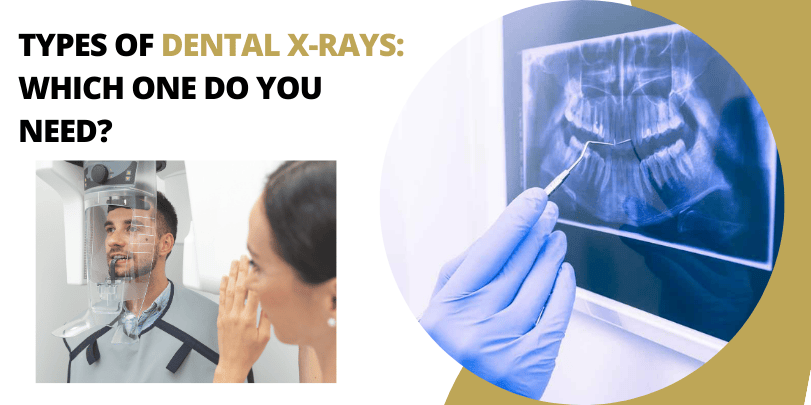
These X-rays provide a broader view of the jaw, skull, and surrounding structures.
Purpose: Gives a full view of the entire mouth, including teeth, jaw, and sinuses.
How It Works: The machine moves around the head to capture the image.
Who Needs It?
Purpose: Evaluates the side profile of the skull and jaw.
How It Works: Taken from the side of the head.
Who Needs It?
Purpose: Provides a 3D image of teeth, nerves, and bone.
How It Works: Uses advanced technology to create cross-sectional images.
Who Needs It?
Also read – Types of Dental X-Rays: Which One Do You Need?
| Concern | Recommended X-Ray |
| Checking for cavities | Bitewing X-Ray |
| Root canal issues | Periapical X-Ray |
| Wisdom teeth evaluation | Panoramic X-Ray |
| Braces & jaw alignment | Cephalometric X-Ray |
| Dental implants planning | CBCT Scan |
| Children’s teeth development | Occlusal X-Ray |
If you’re unsure which X-ray you need, your dentist will recommend the best one based on your dental history and symptoms.
Yes, dental X-rays use very low radiation levels and are considered safe for both adults and children. However, precautions are taken, such as:
Pregnant women should inform their dentist before getting X-rays, although modern technology minimizes risks.
Dental X-rays are an essential part of oral health care, helping detect problems early before they become severe. Whether you need a routine bitewing X-ray for cavities or a CBCT scan for dental implants, knowing the different types can help you understand your treatment plan better.
Next time your dentist recommends an X-ray, you’ll know exactly what to expect and why it’s important for your oral health.
Written by : DR. PUNEET KATHURIA B.D.S., M.D.S., F.I.C.O.I. (USA)
 Teeth in a Day: Immediate Loading Dental Implants Explained
 Why Dental Implants in India Cost 70% Less Than USA, UK & Canada (Without Compromising Quality)
 Complete Cost Guide for Dental Implants in India (2026)
 Best Dental Clinic in Delhi for International Patients: What to Look For
 Why International Patients Choose India for Dental Treatment in 2026
 Dial Local Number in your Country
USA 
Australia 
Canada 
Fill in your details and we'll call you within 2 hours to confirm.