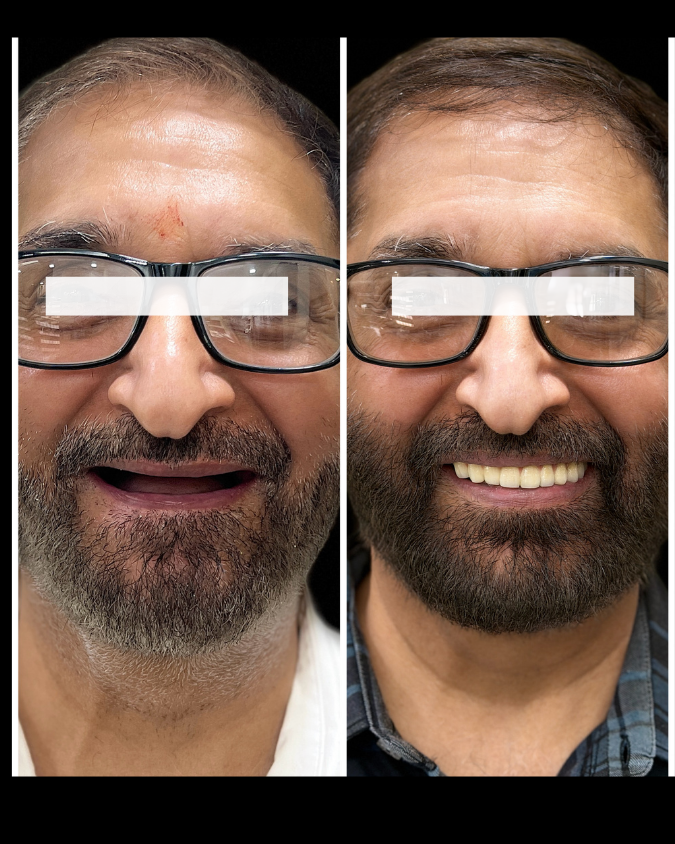
Losing a tooth can affect both your smile and overall oral health. If you have a missing tooth, your dentist may suggest two common options for replacement: dental bridges and dental implants. Both options restore function and aesthetics, but they differ in longevity, cost, procedure, and maintenance.
This detailed guide compares dental bridges and implants, covering their definitions, types, benefits, risks, procedure details, and most importantly- which one lasts longer.
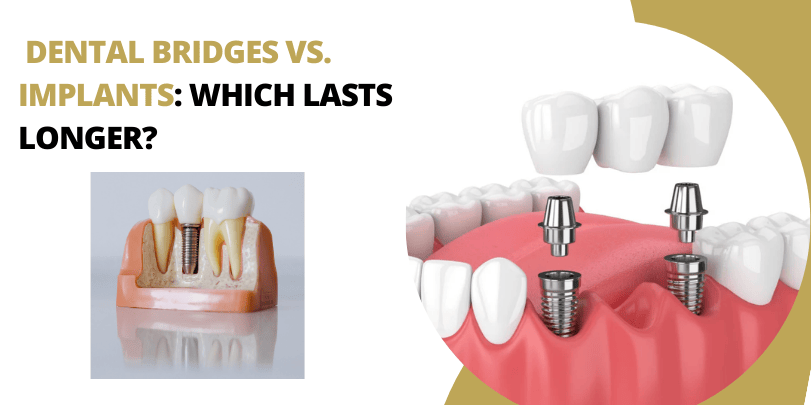
A dental bridge is a fixed dental restoration used to replace one or more missing teeth by anchoring an artificial tooth (pontic) to the adjacent natural teeth or implants. The supporting teeth, known as abutment teeth, hold the bridge in place.
1. Traditional Dental Bridges – The most common type, where a false tooth is held in place by dental crowns on the adjacent natural teeth.
2. Cantilever Bridges – Used when only one natural tooth is available next to the missing tooth for support.
3. Maryland Bridges – Uses a metal or porcelain framework instead of crowns to hold the false tooth in place.
4. Implant-Supported Bridges – Uses dental implants instead of natural teeth for support, making them more durable.
A dental implant is a titanium post that is surgically placed into the jawbone to act as an artificial tooth root. A crown is then placed on top of the implant to mimic a natural tooth.
1. Endosteal Implants – The most common type, placed directly into the jawbone.
2. Subperiosteal Implants – Placed under the gum but above the jawbone, used for patients with insufficient bone density.
3. Zygomatic Implants – Anchored in the cheekbone instead of the jawbone, used in severe bone loss cases.
Timeframe: 2-3 visits over a few weeks.
Timeframe: Several months due to the healing process.
| Feature | Dental Bridges | Dental Implants |
| Longevity | 10-15 years | 25+ years, often lifetime |
| Durability | Can weaken over time | More stable and durable |
| Bone health | Does not prevent bone loss | Prevents bone loss |
| Maintenance | Requires special flossing | Functions like a natural tooth |
| Cost over time | May need replacement | Higher upfront costs but lasts longer |
Winner: Dental implants last longer because they integrate with the jawbone, preventing bone loss and further tooth loss. Bridges typically need replacement after 10-15 years, while implants can last 25 years to a lifetime with proper care.
Also read- Straight Vs Tilted Dental Implants: All You Need to Know
Choose a Dental Bridge if:
Choose a Dental Implant if:
If longevity is the most important factor, dental implants are the better choice. They can last 25+ years to a lifetime, while dental bridges may need replacement after 10-15 years.
However, if you need a more affordable, quicker solution, dental bridges may be the better option. Ultimately, consulting with a dentist is essential to determine the best choice based on your oral health, budget, and personal preferences.
Regardless of which option you choose, maintaining good oral hygiene and regular dental check-ups will ensure the success and longevity of your dental restoration.
Written by : DR. PUNEET KATHURIA B.D.S., M.D.S., F.I.C.O.I. (USA)
 Teeth in a Day: Immediate Loading Dental Implants Explained
 Why Dental Implants in India Cost 70% Less Than USA, UK & Canada (Without Compromising Quality)
 Complete Cost Guide for Dental Implants in India (2026)
 Best Dental Clinic in Delhi for International Patients: What to Look For
 Why International Patients Choose India for Dental Treatment in 2026
 Dial Local Number in your Country
USA 
Australia 
Canada 
Fill in your details and we'll call you within 2 hours to confirm.
We will get back to you shortly. Meanwhile, feel free to call our toll free number or WhatsApp us directly for any enquiry.
Toll Free: 1800-11-7272