 Australia No
 Canada No
 India Toll Free No
 UK No
UK No USA No







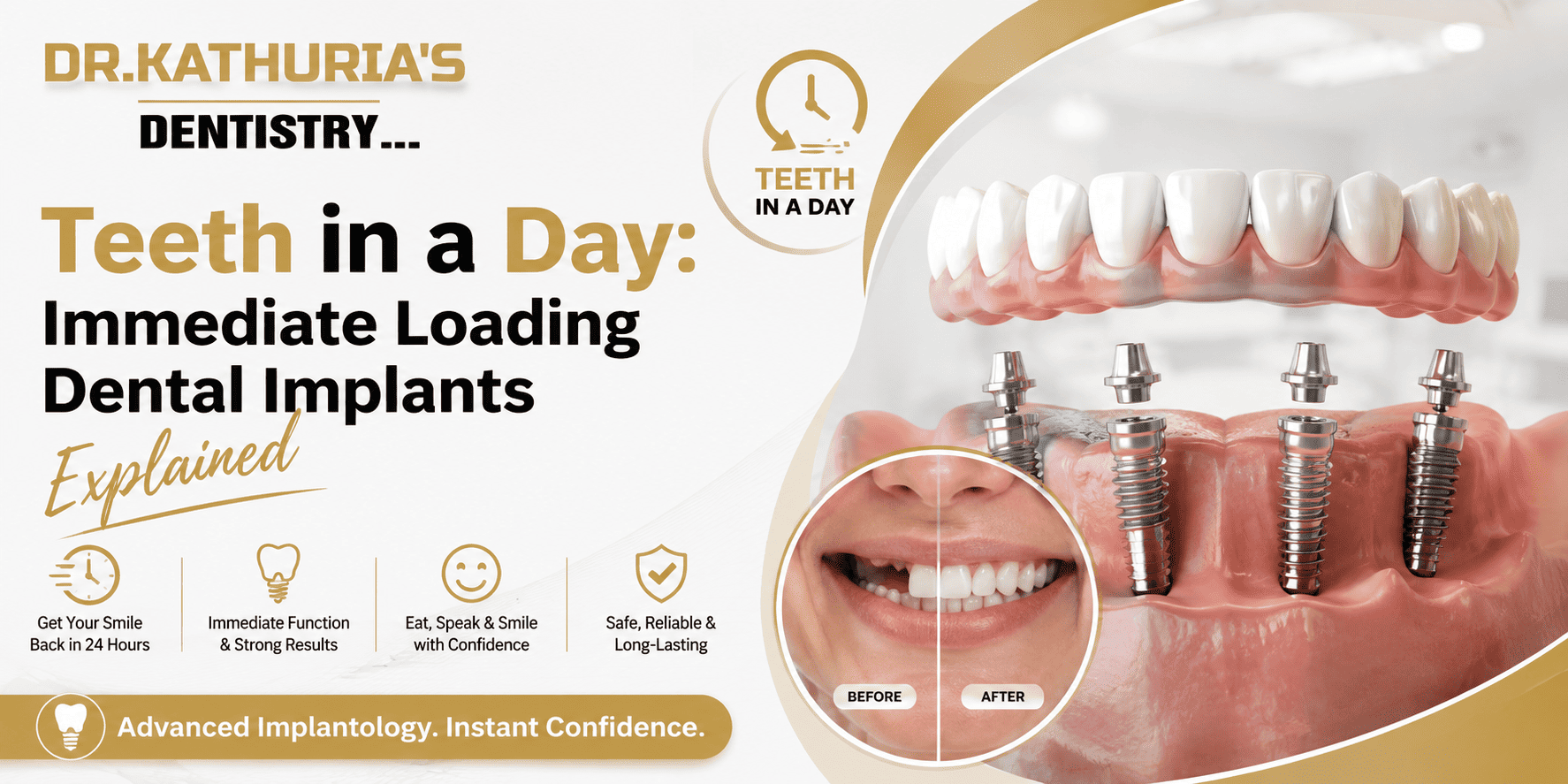
Losing several teeth can affect much more than your smile. It may make eating difficult, change the way you speak and reduce your confidence. Traditional dental implant treatment can take several months before fixed teeth are placed. However, modern implant dentistry may offer a faster option for suitable patients.
Teeth in a Day, also known as Immediate Loading Dental Implants or Same Day Dental Implants, allows selected patients to receive dental implants and a fixed temporary set of teeth within the same day or shortly after implant surgery.
For patients looking for fast dental treatment, especially those travelling from another city or country, this advanced technique can make the treatment process more comfortable and convenient.
What Are Immediate Loading Dental Implants?
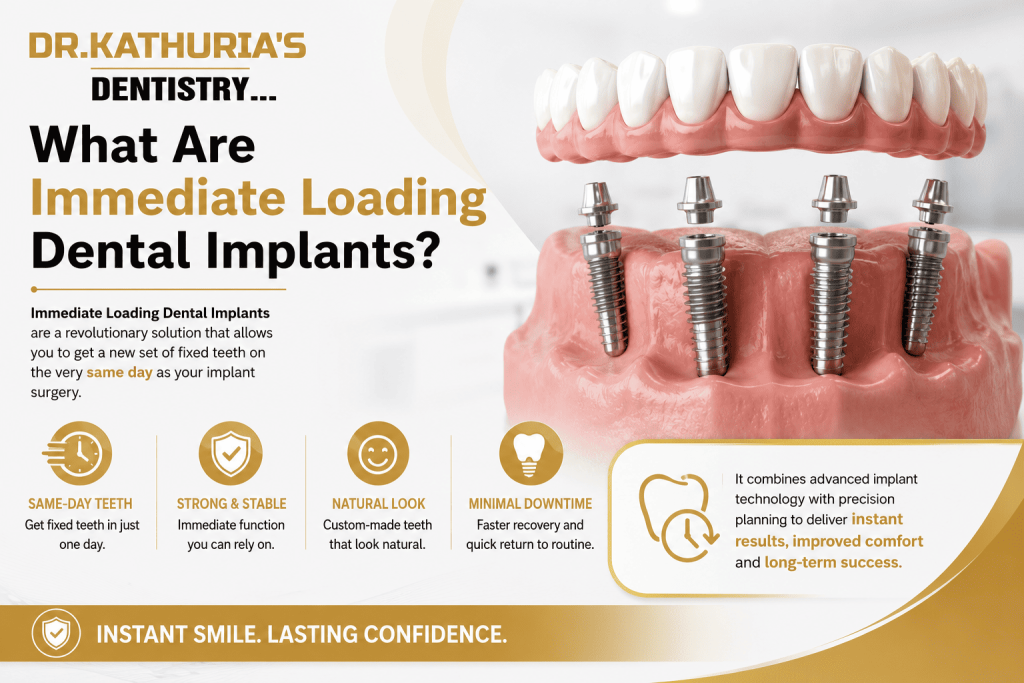
A dental implant is a small titanium post placed inside the jawbone to replace the root of a missing tooth. It provides support for a dental crown, bridge or complete set of fixed teeth.
In conventional implant treatment, the implants are normally left to heal for a few months before fixed teeth are attached. This healing period allows the implants to join securely with the jawbone.
With Immediate Loading Dental Implants, a temporary fixed tooth or bridge is connected to the implants on the day of surgery or within a very short period. Immediate loading is generally defined as connecting the implant to a dental prosthesis within one week of implant placement.
The temporary teeth are designed to look natural and allow the patient to smile, speak and eat soft food during the healing period.
It is important to understand that “Teeth in a Day” does not always mean that the final permanent teeth are completed in one day. In most cases, patients receive a fixed temporary bridge first. The final teeth are made after the implants and gums have healed properly.
Immediate Implants and Immediate Loading Are Different
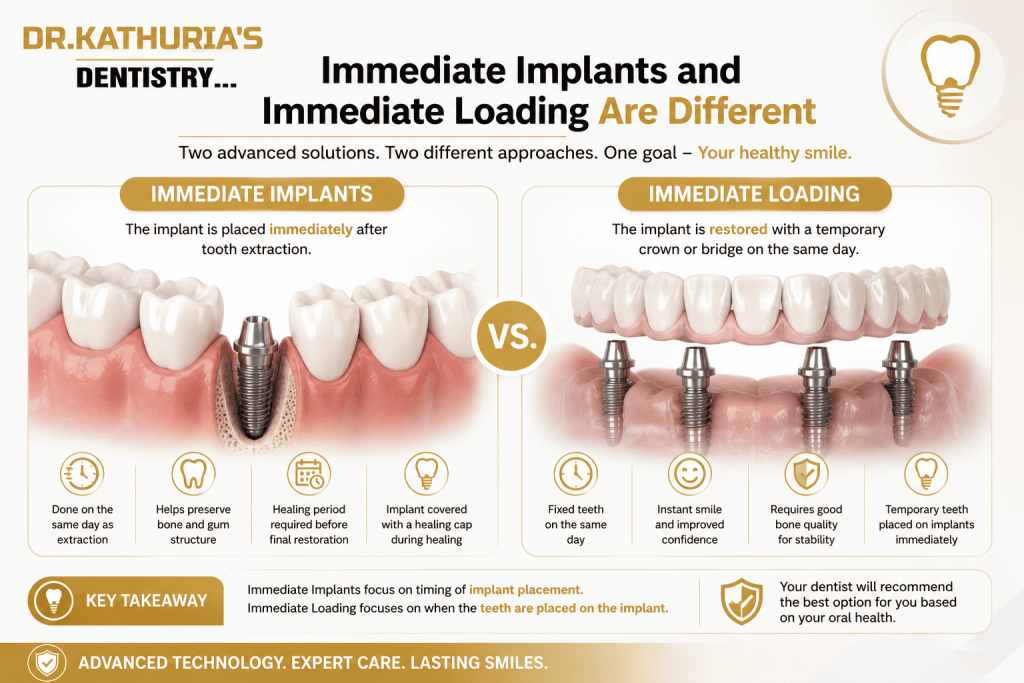
These two terms are often used together, but they do not mean exactly the same thing.
An immediate implant is placed immediately after a damaged or failing tooth is removed.
Immediate loading means that a temporary tooth or fixed bridge is attached to the implant soon after it is placed.
Depending on the condition of the bone and gums, a dentist may perform immediate implant placement, immediate loading or both during the same appointment.
Who Is Eligible for Teeth in a Day?
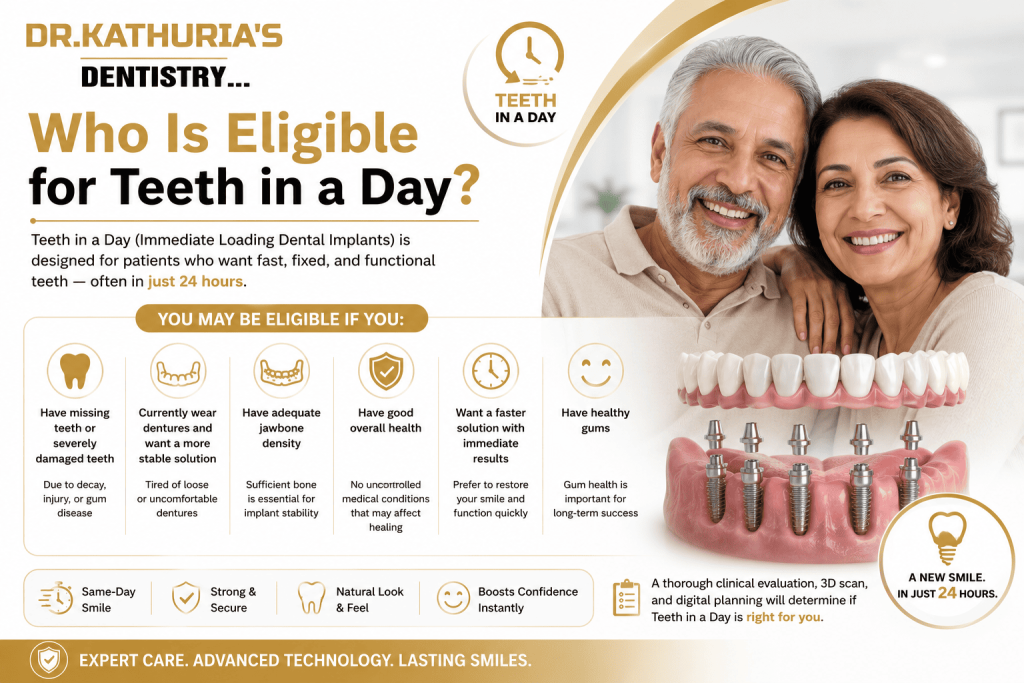
Not every patient is suitable for same-day implant treatment. Careful examination and planning are necessary before the procedure.
A suitable patient usually needs:
- Sufficient jawbone to support the implants
- Good quality bone in the treatment area
- Healthy gums or controlled gum disease
- No uncontrolled active infection
- Good general health
- The ability to maintain proper oral hygiene
- Stable implants at the time of surgery
- Controlled medical conditions, such as diabetes
- A willingness to follow a soft-food diet during healing
The initial stability of the implant is one of the most important factors. The implant must be firmly held by the bone before a temporary fixed bridge can be safely attached. Bone quality, bone quantity, implant design and surgical technique can all affect implant stability.
Heavy smoking, uncontrolled diabetes, severe bone loss, untreated gum disease, teeth grinding and certain medical conditions may reduce eligibility. However, these conditions do not automatically rule out implant treatment. The implant dentist must assess each patient individually.
Because immediate implant placement and loading are complex procedures, they should be performed by clinicians with suitable surgical and restorative implant experience.
How Is Eligibility Checked?
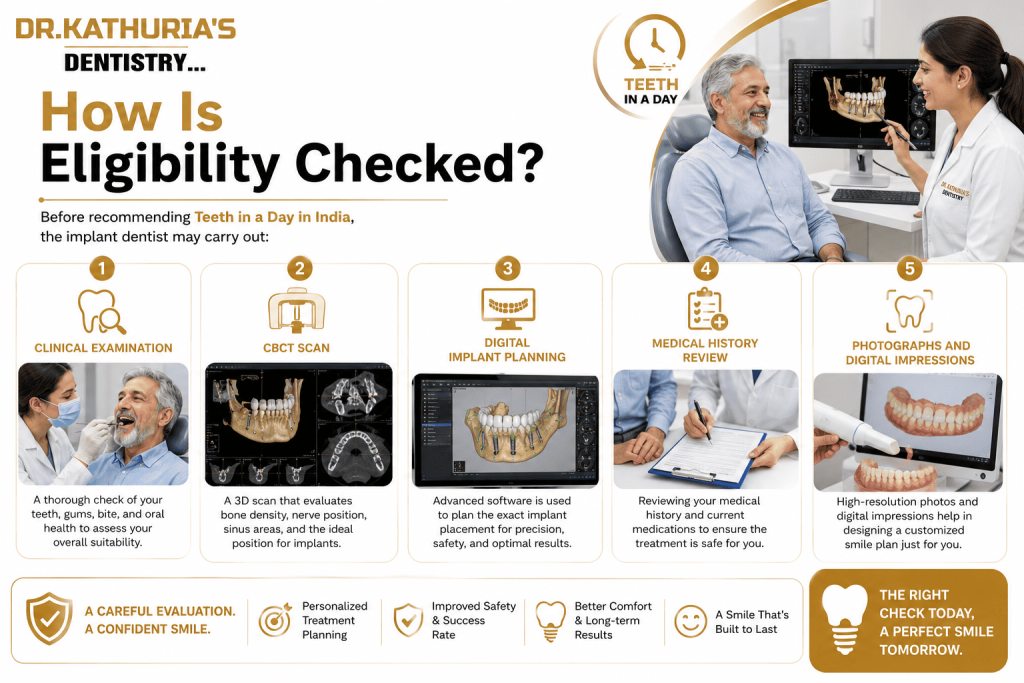
Before recommending Teeth in a Day in India, the implant dentist may carry out:
Clinical Examination
The dentist examines the teeth, gums, bite and overall condition of the mouth.
CBCT Scan
A three-dimensional CBCT scan helps the dentist study the height, width and quality of the jawbone. It also shows important structures such as nerves and sinuses.
Digital Implant Planning
Digital software may be used to plan the position, angle and size of each implant before surgery.
Medical History Review
The dentist reviews medical conditions, current medicines, allergies, smoking habits and previous dental treatment.
Photographs and Digital Impressions
Photographs, scans or impressions may be taken to design the temporary fixed teeth before the implant surgery.
Teeth in a Day Procedure: Step by Step
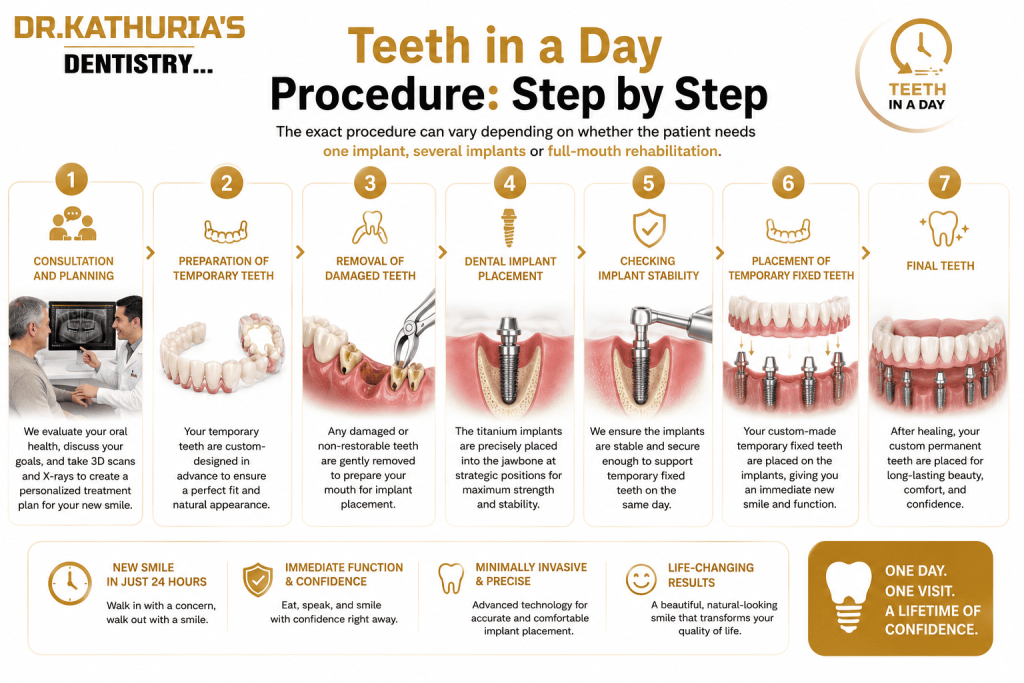
The exact procedure can vary depending on whether the patient needs one implant, several implants or full-mouth rehabilitation.
Step 1: Consultation and Planning
The dentist studies the patient’s dental condition, medical history, CBCT scan and treatment expectations.
A personalised treatment plan is then prepared. It may include tooth removal, implant placement, bone grafting and temporary fixed teeth.
Step 2: Preparation of Temporary Teeth
Digital scans or impressions are used to plan the shape, size and appearance of the temporary teeth.
In some cases, the temporary bridge can be prepared before surgery. In other cases, it is made or adjusted immediately after the implants are placed.
Step 3: Removal of Damaged Teeth
Teeth that cannot be saved are removed carefully. Whenever possible, the dentist tries to protect the surrounding bone and gum tissue.
Step 4: Dental Implant Placement
The implants are placed in carefully planned positions inside the jawbone.
For full-arch treatment, multiple implants may be used to support a complete fixed bridge. The exact number depends on the patient’s bone, bite and treatment plan.
Step 5: Checking Implant Stability
The dentist checks whether the implants have achieved enough initial stability for immediate loading.
When the implants are stable, they may be connected together through a fixed temporary bridge. Connecting the implants can help distribute biting forces across the full arch.
Step 6: Placement of Temporary Fixed Teeth
A temporary fixed bridge is attached to the implants.
The bite is carefully adjusted so that unnecessary pressure is not placed on the healing implants.
The patient can normally leave the clinic with a fixed set of teeth instead of removable dentures.
Step 7: Final Teeth
After the gums and implants have healed, the temporary bridge is replaced with the final prosthesis.
The final teeth are designed for long-term strength, comfort, function and appearance.
Recovery Timeline After Same-Day Dental Implants
Recovery is different for every patient. A general timeline may look like this:
First 24 to 48 Hours
Mild swelling, discomfort or minor bleeding may occur. The dentist may prescribe medicines and provide instructions for cleaning the mouth.
Cold compresses may help reduce swelling.
First Week
Swelling normally starts reducing. Patients should eat soft food and avoid biting hard items.
A follow-up visit may be scheduled to check healing and adjust the temporary teeth.
First 6 to 12 Weeks
The implants continue joining with the jawbone through a natural healing process called osseointegration.
Even though the patient has fixed teeth, a soft diet remains important. Hard or sticky foods may place too much pressure on the healing implants.
After Approximately Three to Six Months
Once healing is complete, the dentist evaluates the implants, gums and bite.
The final fixed teeth can then be prepared and placed. The exact timing depends on the patient’s healing, bone condition and type of treatment.
What Can You Eat After Immediate Loading Implants?
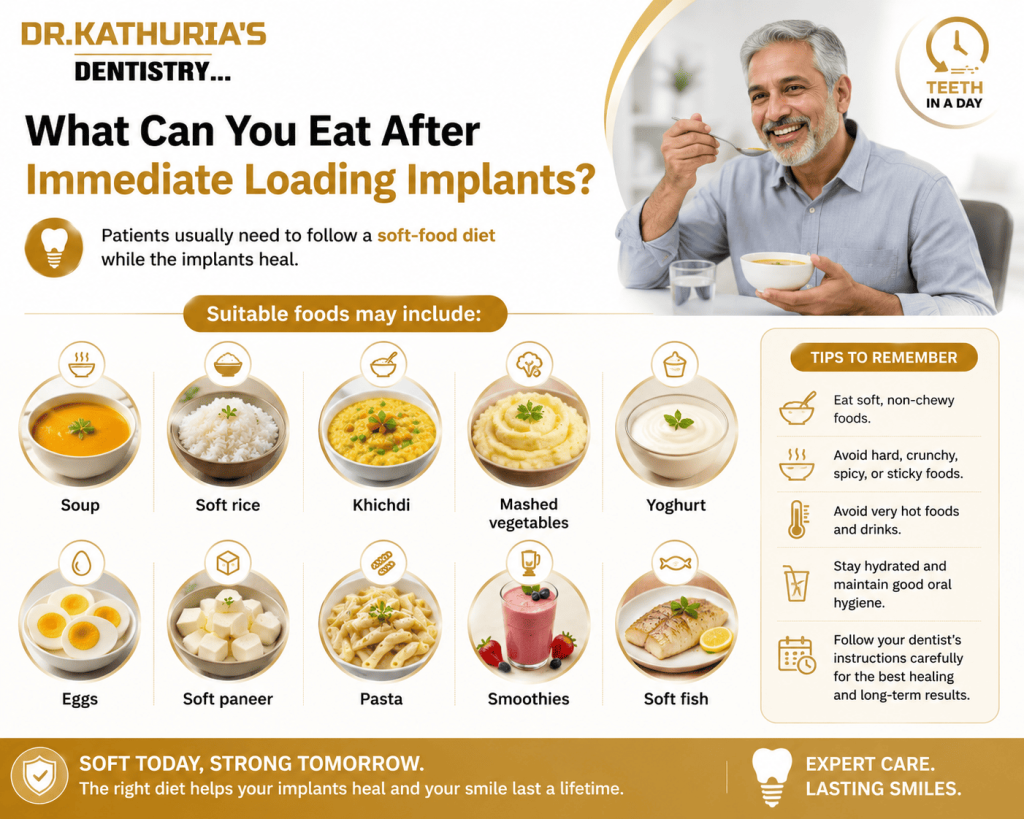
Patients usually need to follow a soft-food diet while the implants heal.
Suitable foods may include:
- Soup
- Soft rice
- Khichdi
- Mashed vegetables
- Yoghurt
- Eggs
- Soft paneer
- Pasta
- Smoothies
- Soft fish
Hard foods, nuts, ice, raw vegetables, hard bread and sticky sweets should be avoided during the initial healing period.
Having fixed teeth does not mean that the implants are fully healed. Following dietary instructions is important for successful recovery.
Benefits of Teeth in a Day
Fixed Teeth Without a Long Toothless Period
Patients can receive temporary fixed teeth soon after implant placement. They usually do not have to remain without teeth during healing.
Faster Dental Treatment
Immediate loading reduces the waiting time between implant surgery and receiving fixed temporary teeth.
Improved Confidence
Patients can smile and speak with greater confidence soon after treatment.
Better Comfort Than Removable Dentures
A fixed temporary bridge does not move like a removable denture and does not need to be removed every day.
Fewer Surgical Visits
In selected cases, extractions, implant placement and temporary teeth can be completed in a planned treatment session.
Natural-Looking Smile
The temporary and final teeth are designed to match the patient’s face, smile and personality.
Improved Chewing Ability
Fixed implant-supported teeth may provide better stability and chewing comfort than loose removable dentures. Patients must still follow a soft-food diet during the healing period.
Benefits for Overseas Patients
India is a popular destination for dental treatment because patients can access experienced implant dentists, modern technology and personalised care.
For international patients, Teeth in a Day India may offer several advantages.
Reduced Number of Visits
Treatment can often be planned so that consultation, scans, extractions, implant placement and temporary fixed teeth are completed within a shorter visit.
Fixed Teeth Before Returning Home
Suitable patients may return home with a fixed temporary smile instead of waiting several months without fixed teeth.
Coordinated Treatment Planning
CBCT scans, digital impressions and medical information can sometimes be reviewed before the patient travels. However, the final treatment decision is made only after a complete clinical examination.
Combination of Treatment and Travel
Patients visiting Delhi may be able to complete the main surgical stage of treatment while staying in India for a planned period.
Follow-Up Support
Follow-up visits can be planned before departure. The clinic may also coordinate online consultations and communicate with the patient’s local dentist when required.
International patients should keep enough time for consultation, surgery, recovery and follow-up adjustments. Return travel should not be planned immediately after a major implant procedure without the dentist’s approval.
Are Same-Day Dental Implants Safe?
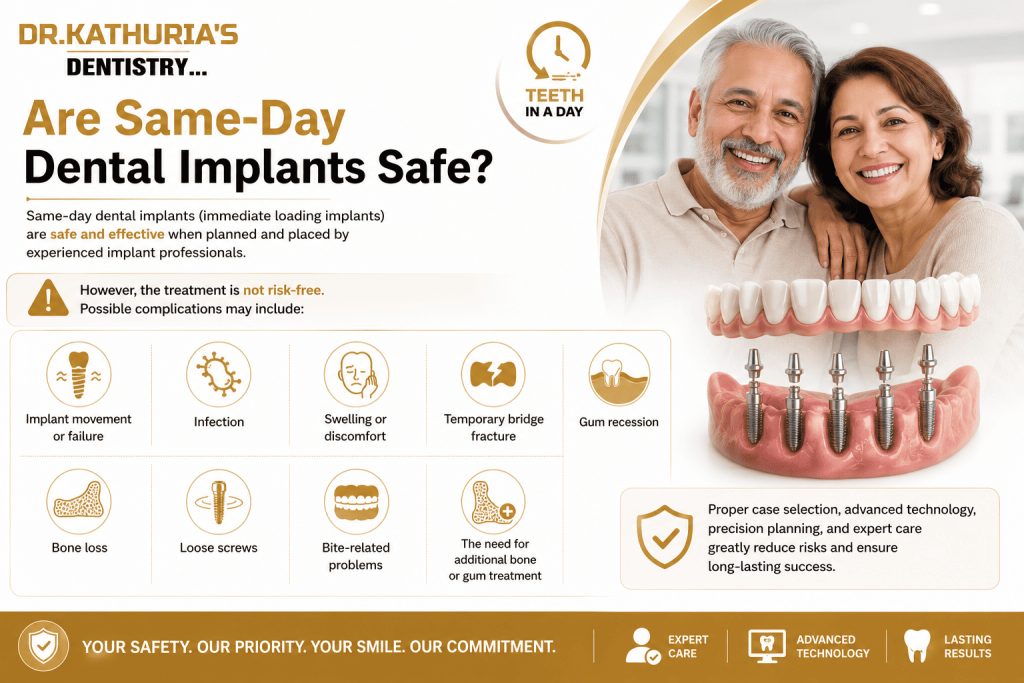
Immediate loading can be a reliable treatment option when the case is properly selected, planned and performed. Research suggests that immediately loaded implant-supported full-arch treatments can produce favourable outcomes in suitable patients.
However, the treatment is not risk-free. Possible complications may include:
- Implant movement or failure
- Infection
- Swelling or discomfort
- Temporary bridge fracture
- Gum recession
- Bone loss
- Loose screws
- Bite-related problems
- The need for additional bone or gum treatment
Careful planning, implant stability, correct bite adjustment, proper oral hygiene and regular follow-up are essential.
No dentist should promise guaranteed results. Success depends on the patient’s bone, health, habits, healing response and ability to follow post-treatment instructions.
How Long Do Immediate Loading Dental Implants Last?
Dental implants are designed to provide long-term support for replacement teeth. Their lifespan depends on several factors, including:
- Quality of implant placement
- Bone and gum health
- Oral hygiene
- Smoking habits
- Diabetes control
- Teeth grinding
- Regular professional cleaning
- Condition of the implant bridge
- Attendance at follow-up visits
The implant bridge may need repair, maintenance or replacement over time, even when the implants remain healthy.
Patients should treat implant-supported teeth with the same care as natural teeth.
Caring for Your New Implant Teeth
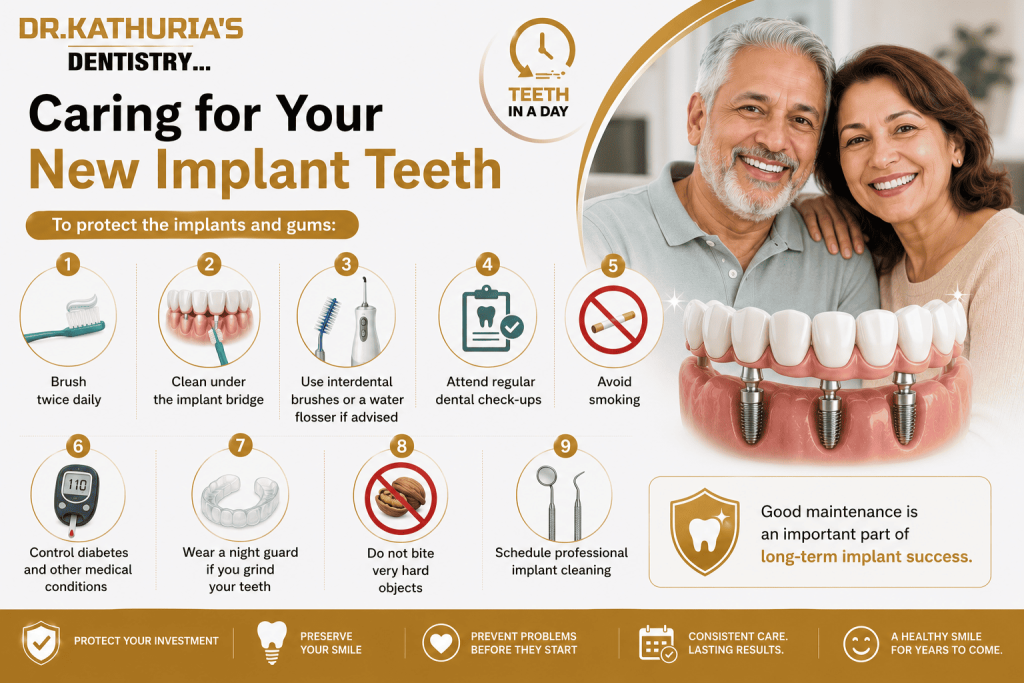
To protect the implants and gums:
- Brush twice daily
- Clean under the implant bridge
- Use interdental brushes or a water flosser if advised
- Attend regular dental check-ups
- Avoid smoking
- Control diabetes and other medical conditions
- Wear a night guard if you grind your teeth
- Do not bite very hard objects
- Schedule professional implant cleaning
Good maintenance is an important part of long-term implant success.
Same Day Dental Implants in Delhi
Patients searching for Same Day Dental Implants in Delhi should choose a clinic that provides complete implant planning, surgery, restorative dentistry and follow-up care.
Before starting treatment, ask the implant dentist:
- Am I suitable for immediate loading?
- Will I receive temporary or final teeth on the same day?
- How many implants will I need?
- Do I need bone grafting?
- How long should I stay in Delhi?
- What foods should I avoid?
- When will my final teeth be placed?
- What maintenance will be required?
- What are the possible risks in my case?
A detailed consultation will help you understand whether fast dental treatment is safe and suitable for you.
Frequently Asked Questions
Can dental implants and teeth be placed on the same day?
Yes, suitable patients may receive dental implants and fixed temporary teeth on the same day. The implants must achieve enough stability to support immediate loading.
Are Teeth in a Day Permanent?
The dental implants are intended to provide long-term support. However, the teeth placed on the day of surgery are usually temporary. Permanent teeth are generally placed after healing.
Is the procedure painful?
The surgery is performed under local anaesthesia or another suitable form of anaesthesia. Patients may experience swelling and discomfort after treatment, which can usually be managed with prescribed medicines and post-operative care.
Can all teeth be replaced in one day?
In selected cases, a complete upper jaw, lower jaw or both arches can receive implants and fixed temporary teeth within a short period. A full examination and CBCT scan are required before confirming eligibility.
Can patients with bone loss receive immediate implants?
Some patients with bone loss may still receive implant treatment. Additional procedures, different implant positions or bone grafting may be required. Immediate loading may not be possible in every case.
Can smokers receive same-day implants?
Smoking can slow healing and increase the risk of implant complications. Smokers should discuss these risks honestly with their dentist and may be advised to stop smoking before and after treatment.
How long should an overseas patient stay in Delhi?
The required stay depends on the number of implants, the need for extractions or grafting, healing and follow-up requirements. A personalised travel schedule should be prepared after reviewing the patient’s scans and medical details.
Conclusion
Teeth in a Day is an advanced implant dentistry option that can help suitable patients receive fixed temporary teeth soon after implant placement.
It can reduce treatment time, improve comfort and allow patients to leave the dental clinic with a confident smile. It may be especially useful for overseas patients looking for planned and efficient implant treatment in India.
However, immediate loading is not suitable for everyone. Successful treatment requires proper case selection, stable implants, healthy tissues, advanced planning and experienced clinical care.
A detailed examination and CBCT scan are the first steps in deciding whether Immediate Loading Dental Implants are the right option for you.
Medical disclaimer: This blog is for general educational purposes only. It does not replace a clinical examination, diagnosis or personalised treatment advice from a qualified dental implant professional.
Written by: DR. PUNEET KATHURIA B.D.S., M.D.S., F.I.C.O.I. (USA)